CFD Applications & Personal Experiences

gemini generated image casoxecasoxecaso

When pressure-based solvers silently break conservation

Okay, real talk for a minute. Last month, I almost submitted a paper with results that were mathematically beautiful and physically impossible. My pressure-based solver said everything was perfect—residuals at , drag coefficient stable to four decimals. Then my advisor asked the simple question: “How much mass is actually entering versus leaving the domain?” Turns out, […]

When pressure-based solvers silently break conservation Read More »

chatgpt image feb 12, 2026, 04 03 36 am

Time-Step Independence Is Not What You Think It Is: The Stiffness vs. CFL Trap

I was simulating vortex shedding behind a cylinder at Re = 100. My explicit compressible solver gave plausible results at Δt = 1e-5 seconds, but to be “safe,” I ran it at Δt = 1e-7. The simulation took four days to capture three shedding cycles. When I mentioned this to a postdoc, she asked: “Why

Time-Step Independence Is Not What You Think It Is: The Stiffness vs. CFL Trap Read More »

chatgpt image feb 10, 2026, 07 16 41 pm cleanup

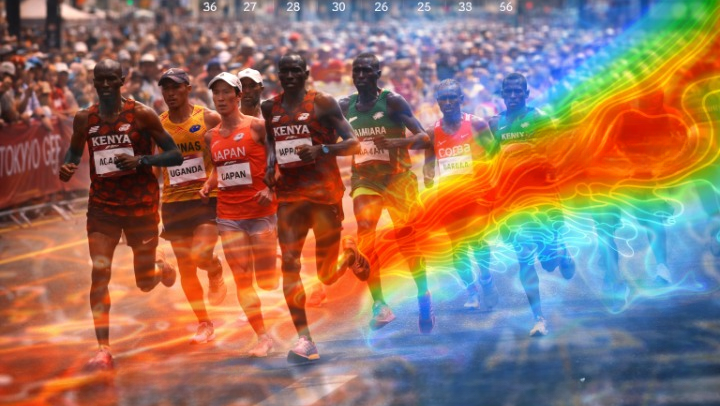
“The Invisible Shield” – How CFD Protects Olympic Athletes from Deadly Heat

When temperatures hit 45°C at the Tokyo 2020 Olympics, marathon runners faced more than just competition—they faced potential heatstroke that could be fatal. Traditional cooling methods failed. This is the story of how computational fluid dynamics created an ‘invisible shield’ of optimized airflow that kept athletes safe and broke world records. The Crisis: When Summer

“The Invisible Shield” – How CFD Protects Olympic Athletes from Deadly Heat Read More »

gemini generated image vqdguzvqdguzvqdg

Meshing Mistakes That Derail CFD Simulations (And How to Fix Them)

The Complete Guide to Avoiding Costly Mesh Errors Here’s a sobering truth: In computational fluid dynamics, we operate under a paradoxical 80/20 rule. While 80% of your simulation’s success depends entirely on mesh quality, most engineers spend only 20% of their time on meshing decisions. This imbalance isn’t just inefficient—it’s expensive. Consider this real-world case from our research: A major

Meshing Mistakes That Derail CFD Simulations (And How to Fix Them) Read More »

image

Taming the Sonic Boom: A Guide to Shock Waves and Capturing Them in CFD

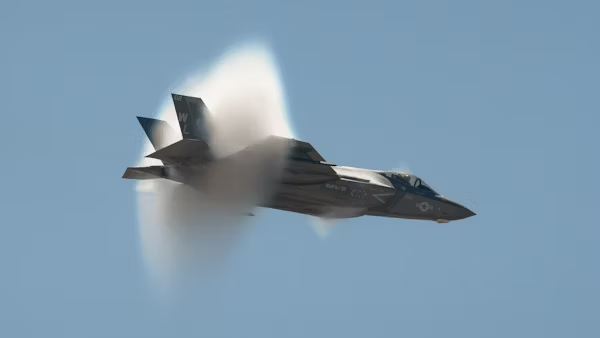
In our previous post on Mach Number, we talked about what happens when an object moves faster than the speed of sound: it outruns its own pressure waves, leading to the formation of a shock wave. Today, we’re going deep on these fascinating and powerful phenomena. We’ll explain what a shock wave is from a physics perspective,

Taming the Sonic Boom: A Guide to Shock Waves and Capturing Them in CFD Read More »

screenshot 2025 11 12 153956

Understanding Fluent Solvers: Pressure-Based vs. Density-Based – Which One to Choose?

Confused by Ansys Fluent solver options? Learn the key difference between Pressure-Based and Density-Based solvers and a simple guide to choose the right one for your CFD simulation You see these options right at the beginning when you set up your Fluent case. However, picking the wrong one can lead to a slow, unstable, or

Understanding Fluent Solvers: Pressure-Based vs. Density-Based – Which One to Choose? Read More »

Scroll to Top