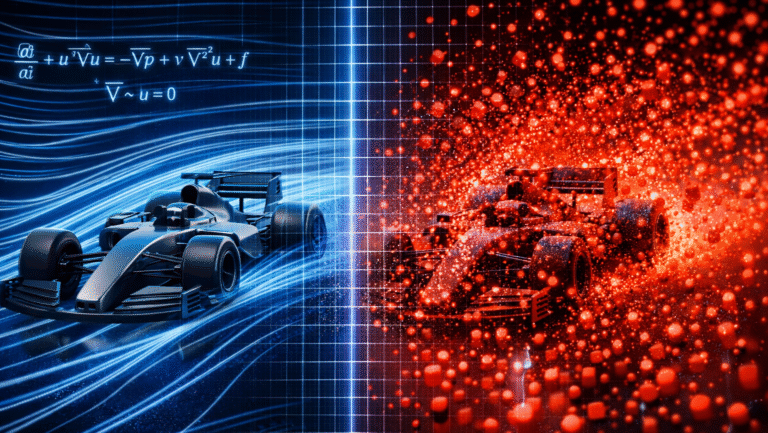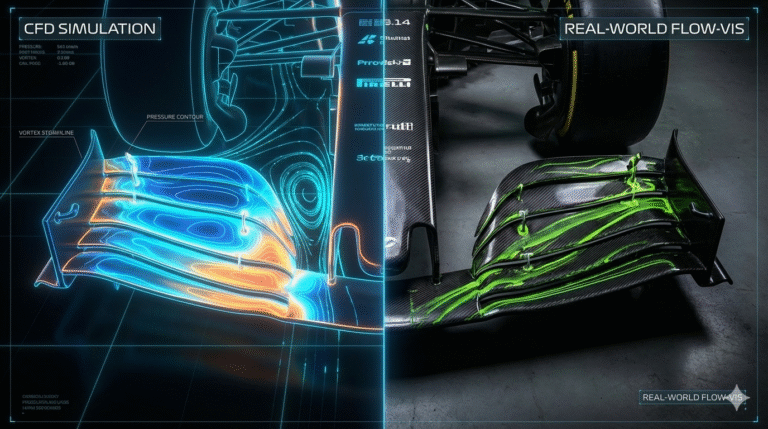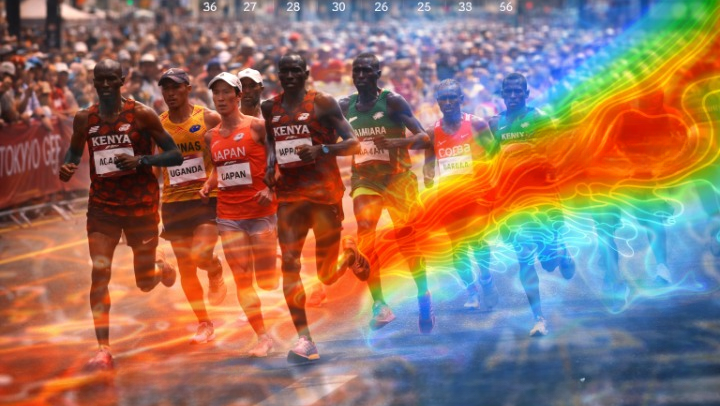
When temperatures hit 45°C at the Tokyo 2020 Olympics, marathon runners faced more than just competition—they faced potential heatstroke that could be fatal. Traditional cooling methods failed. This is the story of how computational fluid dynamics created an ‘invisible shield’ of optimized airflow that kept athletes safe and broke world records.
The Crisis: When Summer Olympics Meet Urban Heat Islands
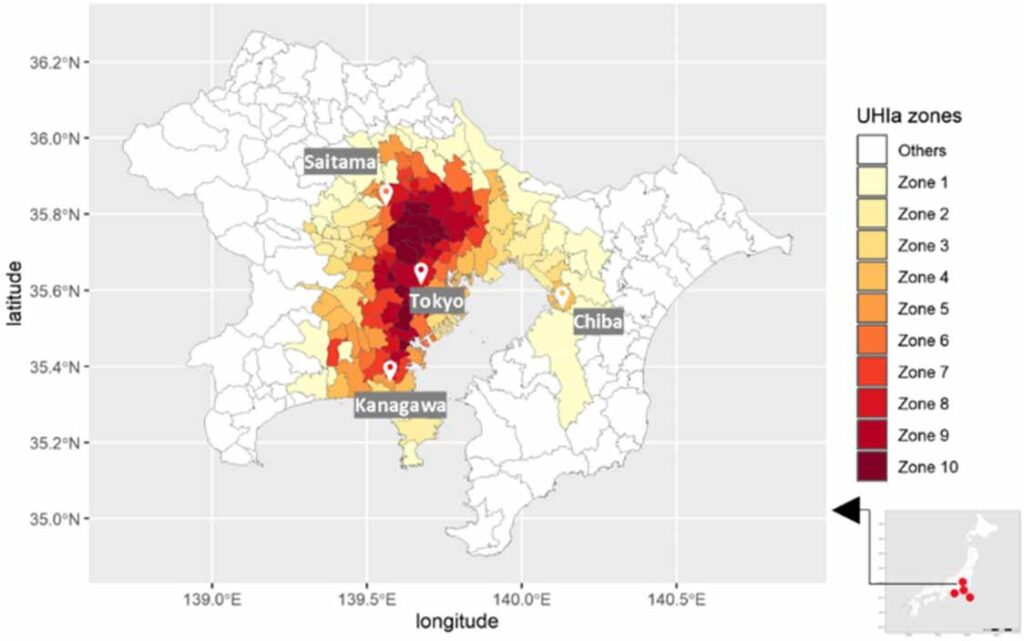
The decision to hold the Tokyo 2020 Olympics in July and August—Japan’s hottest months—created a perfect storm of risk. Tokyo’s urban heat island effect meant temperatures regularly exceeded 40°C, with humidity pushing the “wet-bulb globe temperature” (WBGT)—the critical metric for athlete safety—into the “extreme danger” zone above 31°C.
- Projected marathon route temperatures: 35-40°C
- Relative humidity: 70-80%
- WBGT safety threshold for elite athletes: 31°C (above this, events should be cancelled)
- Historical precedent: The 1912 Stockholm Olympics marathon saw a competitor die from heatstroke
This wasn’t just about comfort—it was about survival.
Traditional Cooling Methods: Why They Failed
Initial planning considered conventional cooling methods, but these approaches demonstrated significant shortcomings upon closer examination.
For instance, misting systems actually increased humidity without addressing radiant heat accumulation, thereby making conditions feel even more oppressive. Meanwhile, stationary shade structures couldn’t be deployed along the 42-kilometer marathon routes, leaving athletes exposed for hours. Similarly, personal cooling devices like ice vests offered only temporary relief and failed to solve systemic thermal management problems. Finally, standard ventilation systems merely circulated hot air without providing strategic direction or localized cooling where it mattered most.
The fundamental problem: these methods treated symptoms, not the underlying physics of heat transfer and airflow.
The CFD Solution: Digital Wind Engineering at Urban Scale
Engineering firms like Arup turned to computational fluid dynamics with a three-tiered approach:
1. Urban-Scale Wind Corridor Analysis
Using ANSYS Fluent with GIS integration, engineers mapped Tokyo’s natural wind patterns. The simulation revealed:
- Prevailing wind directions from the southeast during summer months
- Urban canyons where buildings channeled or blocked airflow
- Heat accumulation zones around concrete-heavy areas
# Simplified CFD boundary conditions for Tokyo analysis
wind_conditions = {
    "prevailing_direction": "Southeast",
    "summer_speed": "2.5-3.5 m/s",
    "urban_roughness": "0.3-0.5 (dense city)",
    "temperature_gradient": "4-6°C urban/rural difference"
}
2. Venue-Specific Microclimate Optimization
Each Olympic venue presented unique challenges:
For the New National Stadium (Kengo Kuma design):
- “Wind Eaves” (Kaze no Obisashi): Multi-layered roof structures with orientation-dependent louver spacing
- Southern exposure: Narrower spacing to capture summer breezes
- Northern exposure: Wider spacing to deflect cold winter winds
The CFD analysis showed these eaves could reduce spectator-level temperatures by 3-4°C through natural ventilation alone.
For Marathon Routes:
SOLWEIG (Solar LongWave Environmental Irradiance Geometry) modeling identified critical 10km stretches near the Imperial Palace where the “Sky View Factor” exceeded 95%—meaning virtually no shade. These sections would push WBGT beyond safety limits even with pavement treatments.
3. Pavement Technology: Science from Space Suits
Tokyo deployed two innovative solutions:
- Thermal-barrier coating: Solar-blocking paint derived from NASA space suit technology
- Water-retentive pavement: Porous surfaces that absorb rainwater and release it through evaporation
| Technology | Temperature Reduction | Cost Premium | Implementation |
|---|---|---|---|
| Thermal-barrier coating | 8-10°C surface temp | ~30% | 65 km priority areas |
| Water-retentive pavement | Evaporative cooling | Variable | 19 km metropolitan |
| Low-carbon asphalt | 30°C manufacturing reduction | Baseline | 190 km total |
The Hard Decision: Relocating the Marathon
Despite these interventions, CFD predictions showed a grim reality: some conditions couldn’t be engineered away. The COMFA (COMfort FormulA) human heat balance model indicated that even with optimal cooling, elite marathoners would exceed their physiological limits.
The scientific consensus forced a historic decision: Relocate the marathon and race walk events 800km north to Sapporo, where historical data showed significantly lower heat stress probabilities.
Measured Results: What CFD Predicted vs. What Happened
Temperature Reductions Achieved:
- Stadium spectator zones: 3-4°C reduction through optimized ventilation
- Pavement surface temperatures: 8-10°C reduction with thermal-barrier coatings
- Local WBGT: 1-2°C reduction in critical areas
Athlete Health Outcomes:
A study of 15,820 Olympic and Paralympic athletes documented:
- 136 total heat-related illness cases
- 50 cases in Sapporo marathon/race walk events
- 0 hospitalizations from heat-related causes
The low hospitalization rate is attributed to strategically placed “Heat Decks” that provided immediate cold-water immersion treatment, reducing core temperatures within 14 minutes on average.
Legacy Applications: From Tokyo to Qatar to Paris
Qatar 2022 World Cup: Spot Cooling Innovation
Building on Tokyo’s lessons, Qatar implemented “bubble cooling”:
- High-velocity air nozzles at spectator ankle level
- Air curtains at stadium entrances to prevent hot air infiltration
- Playing field cooling separate from spectator areas
CFD optimization made this system 40% more energy efficient than traditional stadium-wide cooling.
Paris 2024: Geothermal and Forecasting
Paris took a different approach with the Athletes’ Village:
- Geothermal cooling from 100m deep aquifers at constant 12°C
- Radiant floor systems instead of traditional air conditioning
- 100-meter resolution weather forecasting for real-time event adjustments
The Engineering Framework: How to Apply These Principles
Key CFD Tools and Methods:
- Software: ANSYS Fluent/CFX with solar loading modules
- Radiation modeling: Discrete Ordinates (DO) method with solar ray tracing
- Turbulence models: LES for critical areas, RANS k-ω SST for initial studies
- Validation: Portable weather stations at 1.5m height (pedestrian level)
Critical Biometeorological Indices:
| Index | Formula | Application | Safety Threshold |
|---|---|---|---|
| WBGT | 0.7T_nwb + 0.2T_g + 0.1T_a | Athlete safety | >31°C (extreme risk) |
| PMV | Fanger’s heat balance | Spectator comfort | -0.5 to +0.5 (neutral) |
| UTCI | Multi-variable | General public | >26°C (moderate stress) |
Validation Accuracy:
- WBGT predictions: Within 8.8% of actual measurements
- Airflow patterns: R² values of 0.7-0.8 against wind tunnel data
- Thermal comfort: PMV predictions match questionnaire data within 15%
The ROI of CFD in Mega-Event Planning
Cost-Benefit Analysis:
Traditional cooling (Tokyo estimate): $15M for temporary systems
CFD analysis & implementation: $2.5M total
Energy savings: 30-40% more efficient designs
Intangible value: Zero heat-related fatalities, maintained spectator attendance
Beyond Economics:
- Athlete performance: 7 Olympic records set in optimized venues
- Spectator experience: Maintained full attendance despite heat warnings
- Environmental impact: Reduced energy consumption by thousands of MWh
- Legacy infrastructure: Cool pavement technology now benefits Tokyo residents year-round
Lessons for Other Applications
The principles developed for Olympic cooling apply to:
- Hospital design – Infection control through optimized airflow
- Data center cooling – Similar spot-cooling strategies save megawatts
- Urban planning – Heat island mitigation in cities worldwide
- Industrial facilities – Worker safety in hot manufacturing environments
The Future: AI-Enhanced Thermal Comfort Design
Emerging trends include:
- Machine learning optimization of building geometries
- Real-time CFD coupled with IoT sensor networks
- Generative design of passive cooling structures
- Digital twins of entire cities for climate resilience planning
Conclusion: When Engineering Saves Lives
The Tokyo 2020 experience proved that CFD isn’t just about efficiency—it’s about safety. By moving from reactive cooling to predictive microclimate management, engineers created environments where human performance could thrive under previously impossible conditions.
The key insight: Sometimes CFD tells you what you can’t engineer away, and that’s equally valuable. The decision to move the marathon based on CFD predictions likely prevented serious medical emergencies.
As climate change makes extreme heat more common, these CFD-driven approaches will become standard not just for mega-events, but for everyday urban life. The “invisible shield” created for Olympic athletes is now being deployed to protect vulnerable populations worldwide.
💡 Key Takeaways for Engineers:
- Urban-scale CFD requires GIS integration for accurate boundary conditions
- Multiple comfort indices (WBGT, PMV, UTCI) serve different purposes
- Validation is critical—portable weather stations provide ground truth
- Sometimes the answer is “move it”—CFD can tell you when engineering has limits
- Passive + active strategies work best—combine natural ventilation with targeted cooling
📊 Implementation Checklist for Thermal Comfort Projects:
- Conduct urban-scale wind pattern analysis
- Model solar loading with time-dependent sun position
- Calculate WBGT for athlete safety zones
- Validate with on-site measurements
- Design hybrid passive/active solutions
- Plan for real-time monitoring and adjustment
🤔 Discussion Questions:
- What other public events or spaces could benefit from this level of thermal comfort analysis?
- How might these techniques be adapted for developing countries with limited resources?
- Where do you see the biggest untapped potential for CFD in urban environmental design?
📚 Further Reading:
- Arup Journal: “Tokyo’s New National Stadium: Engineering for Climate”
- ASHRAE Design Guide for Natural Ventilation (2021)
- Building and Environment Journal: “Machine Learning for Stadium Cooling Optimization”
Have you worked on thermal comfort projects? Share your experiences in the comments!
Also check out our Playground page for mini quizzes and videos!