Turbulence Modelling and Closure
A deep dive into how turbulent flows are modelled in computational fluid dynamics — covering Reynolds-Averaged Navier-Stokes (RANS), the turbulence closure problem, two-equation models like k-ε and k-ω SST, Large Eddy Simulation (LES), Direct Numerical Simulation (DNS), and hybrid RANS/LES methods. Written for engineers who want to understand the assumptions behind the models they use.

Can ML Discover a Better Turbulence Model? A New Fix to Spalart-Allmaras for Separated Flows
A review of Bataillie, Casanova & Volpiani, “Improving the Spalart-Allmaras turbulence model for separated flows using field inversion and symbolic regression,” Phys. Rev. Fluids…
Can You Teach a Neural Network to Stay Consistent? DARSM and the Distribution-Shift Trap in Data-Driven RANS
Data-driven turbulence models often fail when deployed in RANS solvers due to distribution shift. This review examines DARSM, a hybrid model that uses neural…
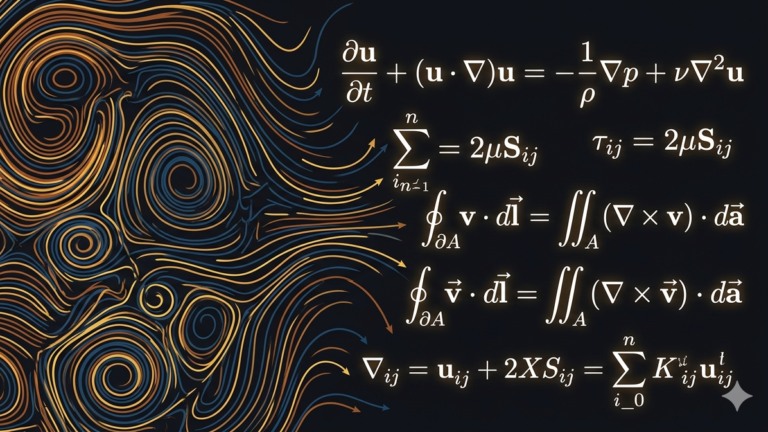
Can a Machine Discover a Turbulence Model? The Rise of Symbolic Regression in RANS Closure
There’s a quiet revolution happening at the intersection of machine learning and turbulence modelling, and it doesn’t look like what most people expect. It…

Rortex: finally, a vortex vector that means what it says
Traditional fluid dynamics often confuses vorticity with actual rotation, leading to inaccurate vortex identification. The Rortex method solves this by isolating rigid-body rotation from…
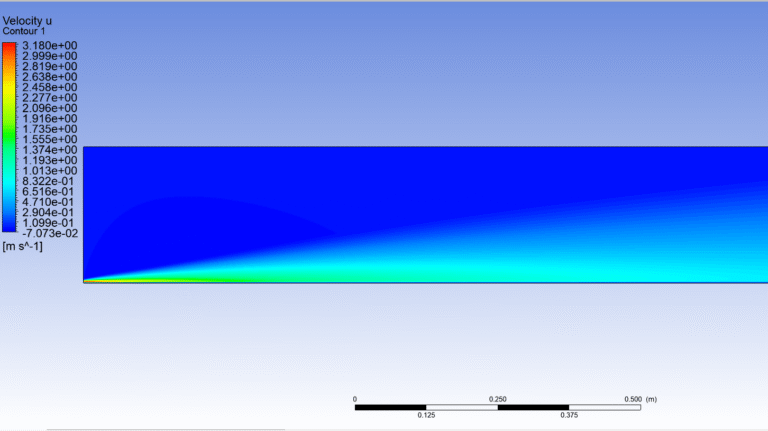
Structural Limits of Linear Eddy-Viscosity Models in the Planar Jet
This article examines the validation of planar turbulent jet simulations, highlighting how key metrics like jet spreading and decay laws align with direct numerical…

How CFD Changed Aerodynamics Forever
How CFD Changed Aerodynamics Forever✈️ Imagine being an aircraft designer in the 1950s. You sketch a wing, build a scale model, and take it…